
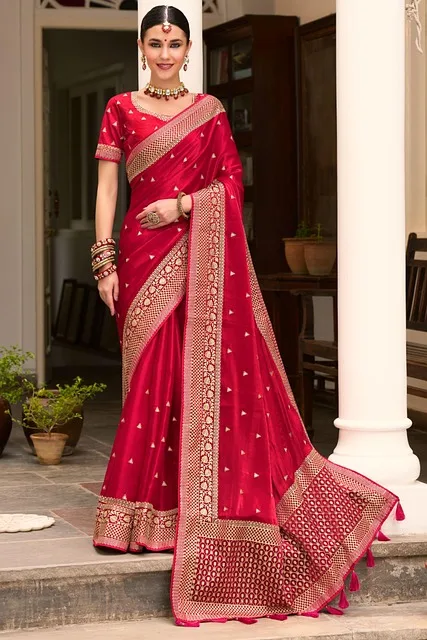
Red saree is not just a garment—it’s a symbol deeply woven into the cultural fabric of India. Whether it’s worn during a wedding, a festival, or a special occasion, the red saree commands attention, radiates beauty, and celebrates tradition. It represents both grace and boldness, often associated with strength, femininity, and emotion.
Let’s explore the rich legacy, variations, and modern significance of the red saree, while uncovering why it continues to hold a powerful place in both fashion and culture.
A Legacy Woven in Red
In Indian tradition, red is more than just a color. It’s the hue of celebration, passion, and purity. For centuries, brides have adorned themselves in traditional red sarees to mark the sacredness of marriage. Ancient scriptures and folk stories describe goddesses draped in red, representing power and fertility.
The choice of a red saree for wedding ceremonies isn’t just about following customs—it’s about honoring a lineage of strong women who wore red as a symbol of confidence and devotion.
The Emotional Connection to Red
A red saree evokes a deep emotional response. It stands out in a crowd yet blends perfectly in the spiritual and festive atmosphere. The color red symbolizes life itself—vibrant, emotional, and intense. Women often recall wearing their first red saree with nostalgia, usually tied to a meaningful event such as a marriage, a family gathering, or a traditional celebration.
The emotional impact of wearing red is so strong that many women choose red even for their professional or formal events, reinterpreting the color to represent both tradition and personal power.
Varieties of the Red Saree
The beauty of the red saree lies in its versatility. From silk to chiffon, from embroidered to printed, there’s a red saree for every taste and occasion. Let’s break down the most popular types:
1. The Traditional Red Saree
A traditional red saree usually features gold zari borders and intricate motifs inspired by mythology or nature. These sarees are commonly handwoven, passed down through generations, and treasured as family heirlooms.
These sarees are especially popular in South Indian and Bengali weddings. In Tamil Nadu, for example, the red and gold Kanjeevaram is a staple for brides. In Bengal, red Baluchari sarees with temple scenes woven into the pallu are iconic.
2. The Bridal Red Saree
The bridal red saree is perhaps the most elaborate of all. It is adorned with sequins, beads, zari, and sometimes even crystals. These sarees are heavy, both in weight and in sentiment, as they are worn during one of the most important days in a woman’s life.
Different regions in India have their own versions of bridal sarees. A North Indian bride might wear a Banarasi silk saree, while a Maharashtrian bride could go for a Paithani with red and gold hues. Each bridal red saree tells a story of heritage and celebration.
3. The Red Silk Saree
A red silk saree is an evergreen classic. Whether it’s Kanjeevaram, Banarasi, Mysore silk, or Assam silk, the richness of silk combined with red creates an unmatched elegance.
Silk sarees are often chosen for pujas, festivals, and weddings. Their natural shine, durability, and grand appearance make them a preferred choice for women of all ages. A red silk saree not only feels luxurious but also showcases fine craftsmanship through its weaves and textures.
4. The Designer Red Saree
For those who love to mix tradition with modernity, a designer red saree offers a perfect blend. Contemporary designers have taken the classic red and given it fresh interpretations. You’ll find red sarees with unconventional cuts, minimalistic embroidery, or even paired with trendy blouses and capes.
Many celebrities have been spotted wearing designer red sarees at film premieres, award functions, and even on runways. These sarees reflect a bold and experimental side while respecting the color’s powerful essence.
Red Saree in Modern Fashion
Thanks to Bollywood and fashion influencers, the red saree has found a strong presence in global fashion. Be it Madhuri Dixit’s iconic red saree in “Hum Aapke Hain Koun” or Deepika Padukone’s regal bridal look, red has been glamorized on the big screen repeatedly.
The trend has now spread worldwide. From Indian weddings in New York to Diwali parties in London, the red saree has become a go-to outfit for global Indian women. Even non-Indians admire the silhouette, elegance, and symbolism of the red saree, making it an international style statement.
Red Saree Styling Tips
Wearing a red saree is an art. With the right styling, it can be transformed from traditional to modern. Here are a few easy tips:
-
Blouse Choices: Pair with a gold, cream, or contrast-colored blouse. Try sleeveless or backless designs for a contemporary edge.
-
Jewelry: Gold ornaments enhance the traditional look, while statement earrings or chokers give a modern vibe.
-
Makeup: Keep it bold. A red lip with a winged liner perfectly complements the red saree’s charm.
-
Hair: Bun with gajra for weddings, or loose waves for casual parties.
Cultural and Regional Variations
Every state in India has its own way of wearing and interpreting the red saree.
-
In Punjab, brides often pair red sarees with a red chooda and heavy phulkari dupattas.
-
In Gujarat, the saree is worn in a seedha pallu style, symbolizing prosperity.
-
In Maharashtra, red Nauvari sarees with green bangles mark traditional bridal attire.
-
In Assam, red silk sarees with white borders and floral motifs are worn during Bihu festivals.
Each of these styles carries deep meaning and showcases how versatile the traditional red saree truly is.
The Red Saree Beyond Weddings
Although most associated with weddings, the red saree is not limited to brides. It is commonly worn during festivals like Karva Chauth, Durga Puja, and Diwali. Even working professionals wear red sarees to corporate parties or ethnic day celebrations.
In recent years, the red saree has also been worn at graduation ceremonies, engagement parties, and even baby showers. Its adaptability makes it suitable for both personal and formal events.
Symbolism of Red in Indian Society
The color red holds immense spiritual and cultural significance in India. It symbolizes Shakti—the feminine power. A woman in a red saree is seen as confident, courageous, and passionate.
Red also denotes beginnings and success. This is why it’s the first choice for important life events—from weddings to housewarmings. In rituals, red sindoor, red bangles, and red bindis accompany the red saree, completing the spiritual symbolism.
Buying the Right Red Saree
Choosing the right red saree depends on occasion, fabric preference, and styling. Here are some pointers:
-
For weddings, opt for a bridal red saree with rich embroidery.
-
For festivals, a traditional red saree with gold zari is ideal.
-
For formal occasions, a designer red saree gives you a bold, fashionable look.
-
For timeless elegance, a red silk saree never fails.
When purchasing, look for authenticity in weave, comfort in drape, and elegance in design. It’s worth investing in a saree that not only looks good but also tells your story.
Caring for Your Red Saree
Preserving the beauty of a red saree requires proper care:
-
Store in a cool, dry place.
-
Use a muslin cloth to wrap silk sarees.
-
Avoid frequent washes—dry clean when needed.
-
Iron on low heat to protect the fabric and embroidery.
A well-maintained red saree can last decades and even be passed down as an heirloom.
Conclusion: Red as an Eternal Choice
The red saree is more than an outfit. It’s a timeless choice that stands for grace, courage, and cultural pride. Whether it’s a red saree for wedding, a festive red silk saree, or a bold designer red saree, the garment adapts to every woman’s style while staying rooted in tradition.
Across generations and geographies, the red saree continues to reign as a favorite. It’s a celebration of womanhood in all its shades—from soft elegance to powerful expression. If there’s one piece every woman should have in her wardrobe, it’s undoubtedly a red saree.